
Finding Delhi Township Residents
Delhi Township has no verified all-resident list. The best starting point changes with the question. A current parcel question starts at the free Delhi BS&A property portal. It can be searched by address, owner, or parcel number and may show an assessed owner or taxpayer, the physical situs address, a mailing address, tax and building context, and sale-history lines where the municipality displays them. An owner record is not a promise that the named person lives there. Keep the property location and correspondence address as separate facts.
For a name, narrow the search before treating a result as a match. A recorded deed can confirm a transaction party and legal description. The Michigan Voter Information Center is for an individual registration status and election information, not a street roster. A court file, marriage or death record, obituary, yearbook, or city directory can supply a date-specific second check. Delhi Township residents may also appear under Holt, Lansing, Mason, Ingham County, or older community labels, depending on the record and period.
- Search Delhi BS&A by the name, address, or parcel already known, and write down the situs, mailing address, parcel number, and legal description separately.
- Use the Ingham deed-index route to confirm a recorded transfer party. For early material, ask the Register of Deeds about the vault appointment.
- Check the Michigan Voter Information Center only for the relevant individual and election jurisdiction, recognizing that protected and redacted fields stay closed.
- For a historic household, search the CADL directory, yearbook, map, obituary, and house-history holdings before drawing a current-residence conclusion.
- When the record is not online, contact the custodian with the exact parcel, record type, and time range, or make a focused Michigan FOIA request where it applies.
Note: A recorded owner, a mailing address, and an old directory entry each describe a different relationship to an address.
Delhi Township Resident Record Keepers
Delhi Township assessing, Ingham County recording and clerk offices, the courts, and state election services hold different pieces of the resident trail. Delhi is not the county seat. The township assesses local parcels, while Mason and Lansing are the practical county-office locations for many official records. Each office has its own access limits and record purpose, so an address search does not replace a request to the office that keeps the original document.
Ingham County Register of Deeds
341 South Jefferson Street
Mason, MI
517-676-7216
Delhi Charter Township Assessing
2074 Aurelius Road
Holt, MI 48842
517-694-1502
Michigan Elections Services
Statewide voter information
Individual status and ballot tools
See local clerk through MVIC
The Ingham County Clerk also keeps county vital records and election administration, while the circuit and probate counters handle public court material. The clerk and Register of Deeds operate from the county’s Mason offices; court public review is in Lansing. For a Delhi Township record, give staff the parcel, record type, time range, and full name rather than asking for broad personal information.
Delhi Township BS&A Record Search
The Delhi BS&A Online portal is the strongest current property starting point in the Delhi Township residents directory. Delhi describes the basic portal as free and available around the clock for property, tax, sewer-account, special-assessment, building, and photo information. The search presents record-area choices, then a search method. Search results and exact coverage dates were not exposed in the research inspection, so a missing result does not prove a parcel has no history.
| Delhi BS&A field | Entry type | Use in a resident trail | Limit |
|---|---|---|---|
| Record focus | Route selector | All Records, Assessing, Building, Tax, Utility Billing, and related areas | Each record area has a different purpose |
| By | Selector | Address, Name, Parcel Number, or account identifiers | Matching rules are not published on the Delhi landing page |
| Street Address | Text | Find a situs address or begin a street search | It does not establish every occupant |
| Street Number to | Optional text | Set a number range for address research | Export and result-cap behavior was not located |
| Name or Parcel Number | Conditional text | Test an owner or carry a parcel to deeds and GIS | Parcel format is not published on the landing page |
A parcel is the local government’s identifier for a piece of land. A situs address is the physical location used for the parcel. The assessor’s card can contain both a parcel identifier and a mailing address, so copying the labels matters. Delhi is updating property records during 2026 through GIS, drive-by review, and targeted verification work. Confirm a time-sensitive detail with the assessing office.
See the Delhi Township street directory for the full address-by-address chain, including the GIS and deed steps.
Delhi BS&A’s current property-search screen is shown here before a search is run.
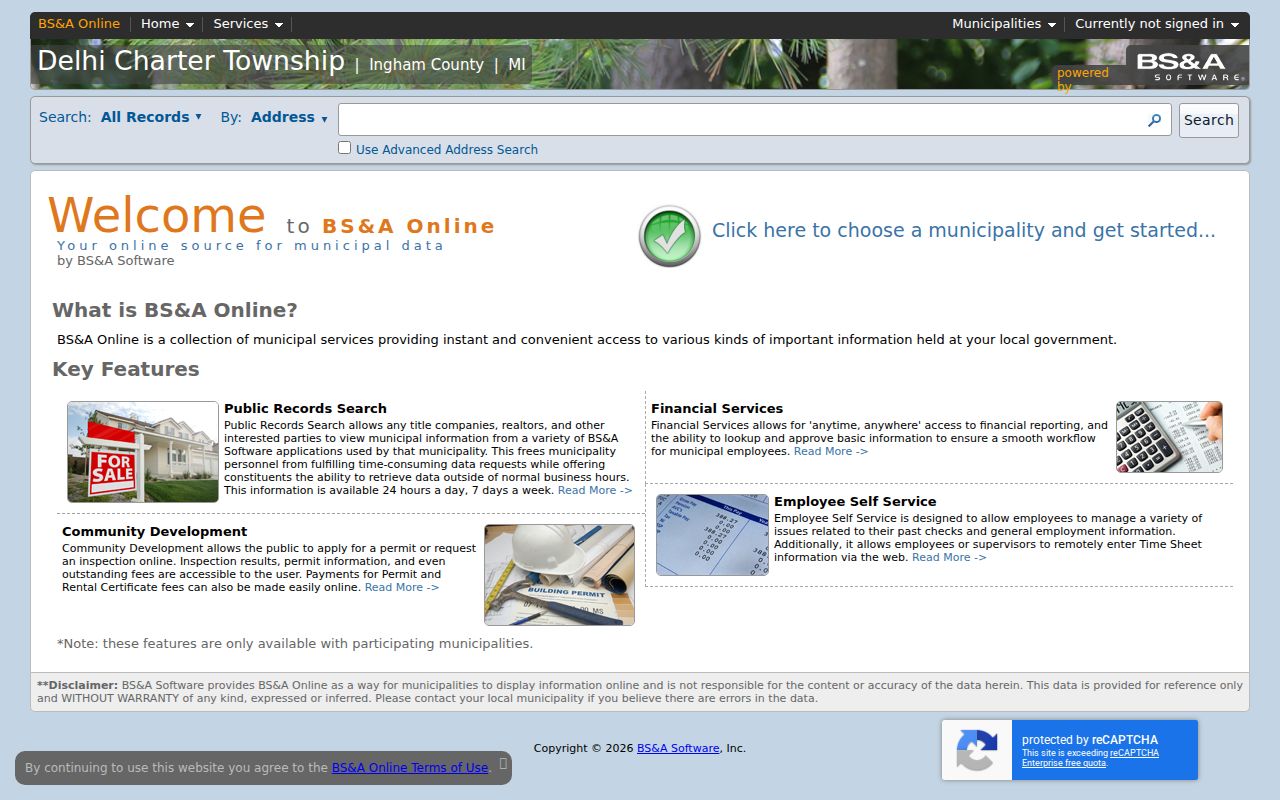
The screen illustrates why the record focus and search method should be written down before interpreting a name or address result.
Delhi Township Voter Record Limits
Michigan voter registration records are public under the state’s FOIA rules, but they are not a public household directory. MVIC provides a person’s registration status, local clerk information, polling place, sample ballot, and absentee tracking. Its live labels were not captured in the research, so the form’s required fields should not be guessed. The public and FOIA route has significant redactions, including driver-license or state-ID numbers, month and day of birth, phone, email, digital signatures, and protected voter information.
Michigan does not register voters by party. A statewide QVF summary can include categories such as voter ID, name, year of birth, registration date, ballot status, jurisdiction, and permanent-absentee status, subject to the governing redactions and use restrictions. Ballot choices remain secret. When a full-file request is appropriate, ask the Secretary of State for a defined county, township or precinct, fields, and date version instead of asking for every detail about a person.
Michigan’s voter lookup provides the official personal status route.
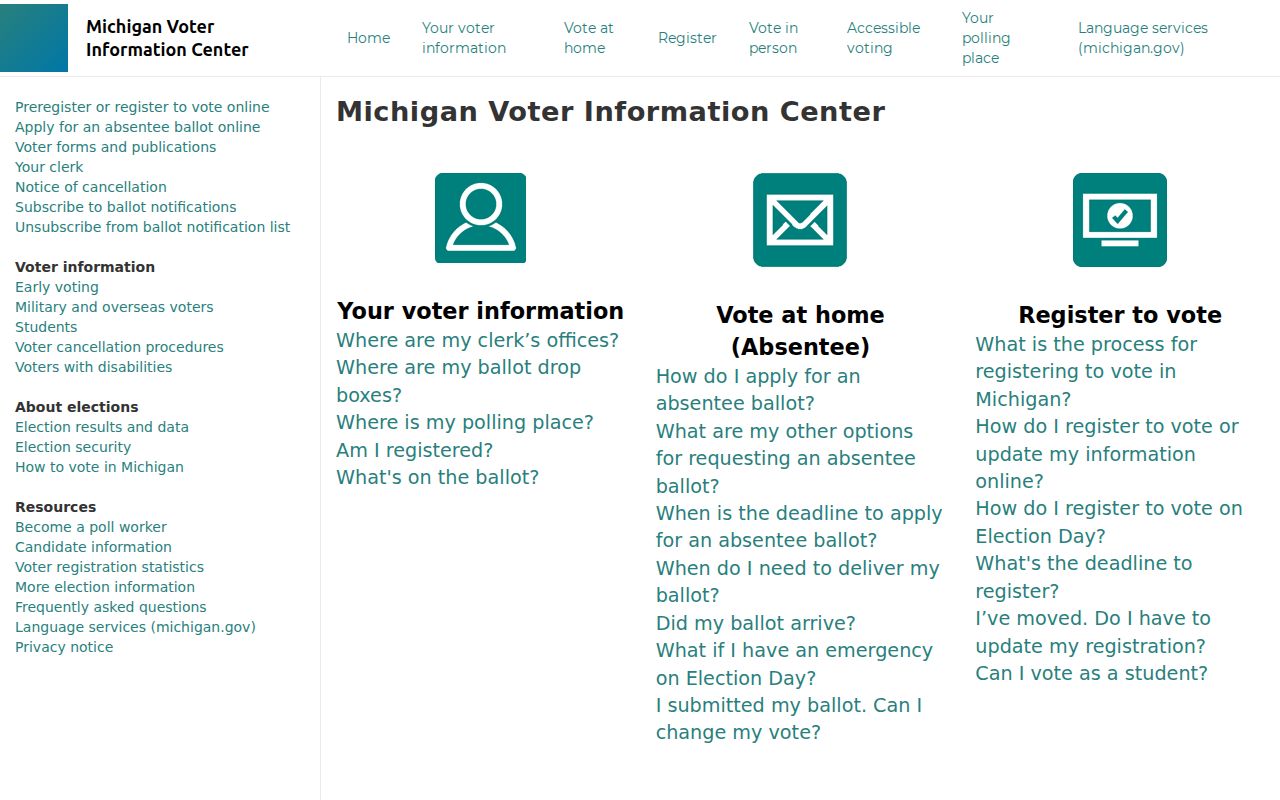
The public tool supports individual election information, not a claim that every person at a Delhi Township address is listed there.
Current Delhi Township Resident Sources
Current records work best as a source map, not as a single Delhi Township residents directory. Property records identify an owner or taxpayer. Deeds identify recorded transaction parties. Court indexes identify public cases. Voter tools confirm limited election status. None of those sources proves every person who lives at an address. The source column below explains the question each record can answer and the channel to try when a web search does not produce enough.
| Delhi Township source | What it can confirm | Custodian | Access channel |
|---|---|---|---|
| BS&A property and tax record | Owner or taxpayer, parcel, situs, mailing address, assessment context | Delhi Assessing | Free portal, walk-in or appointment |
| Recorded deed index | Grantor, grantee, instrument, and legal description | Ingham Register of Deeds | Direct Search, Tapestry, public computers, or vault |
| Voter status and QVF summary | Individual status and public election fields subject to redaction | Michigan Secretary of State | MVIC or focused FOIA request |
| Public court file | Party, case number, type, date, and public disposition | Ingham Courts or MiCOURT | Case search, paid name route, or clerk counter |
| Business or license record | Public filing or professional affiliation | Ingham Clerk or LARA | Official filing and license portals |
The Delhi Township resident lookup applies this source map to one person. A business filing or license can verify a public affiliation, but a business contact address should not be turned into a claim about a private residence.
Lawful use. Delhi Township public records can support personal research, family history, civic questions, and record verification. Do not use a name or address trail to stalk, threaten, harass, or harm anyone.
Delhi Township Court Name Checks
A court name match needs more than a name. Ingham’s county search routes Circuit Court, Probate Court, and 55th District Court matters through the county courts and MiCOURT. The county case-number search is free, while name searching is a paid route. Public files can have restricted categories. The safe method is to take a known case number, date, or county from a property, vital, or public filing record and then ask the clerk’s public counter whether the requested document is open.
For federal matters, PACER is the federal court route. For current Ingham Probate matters, the court says WebTCS was implemented on June 15, 2026, while public inspection terminals, workspaces, and clerk-copy routes remain available. Probate can be useful in an heir or estate trail, but confidential and adoption-related documents are not public. Court results should be checked against the case number and party details before a same-name conclusion is made.
Michigan MiCOURT case search is one official statewide starting point.
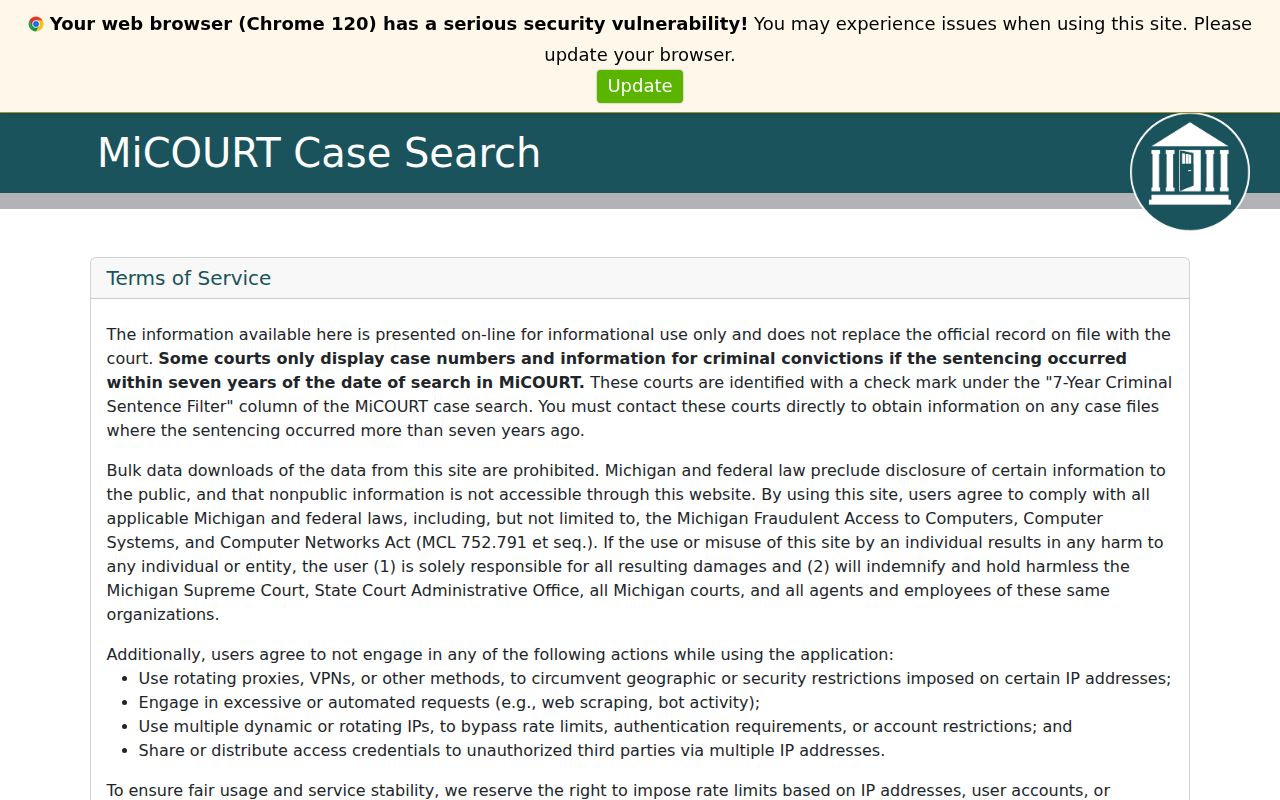
Use a public case-search result to identify the correct court record, then verify the result with the file or clerk when the detail matters.
Delhi Township Postal Geography
Postal names can confuse an otherwise sound search. Delhi is a 28.5-square-mile charter township, and Holt is its best-known unincorporated community rather than a city. A delivery label may say Holt, Lansing, or Mason while the parcel, township service, and deed use other geographic language. Northern Delhi land was annexed into Lansing in the early 1960s. An older address may therefore cross township, Lansing, Holt, and county records without indicating an error.
Use USPS to verify delivery geography, the township or county GIS for a reference parcel location, BS&A for assessment, and the legal description or recorded deed for title geography. The GIS map is generalized for planning and reference, not a legal survey. It shows parcels, approximate boundaries, parks, zoning, wetlands, and flood information, while the Township warns that accuracy is not guaranteed. A boundary dispute belongs with the assessor or a surveyor.
CADL Local History Center supplies local maps and other records that help place a postal address in its historical setting.
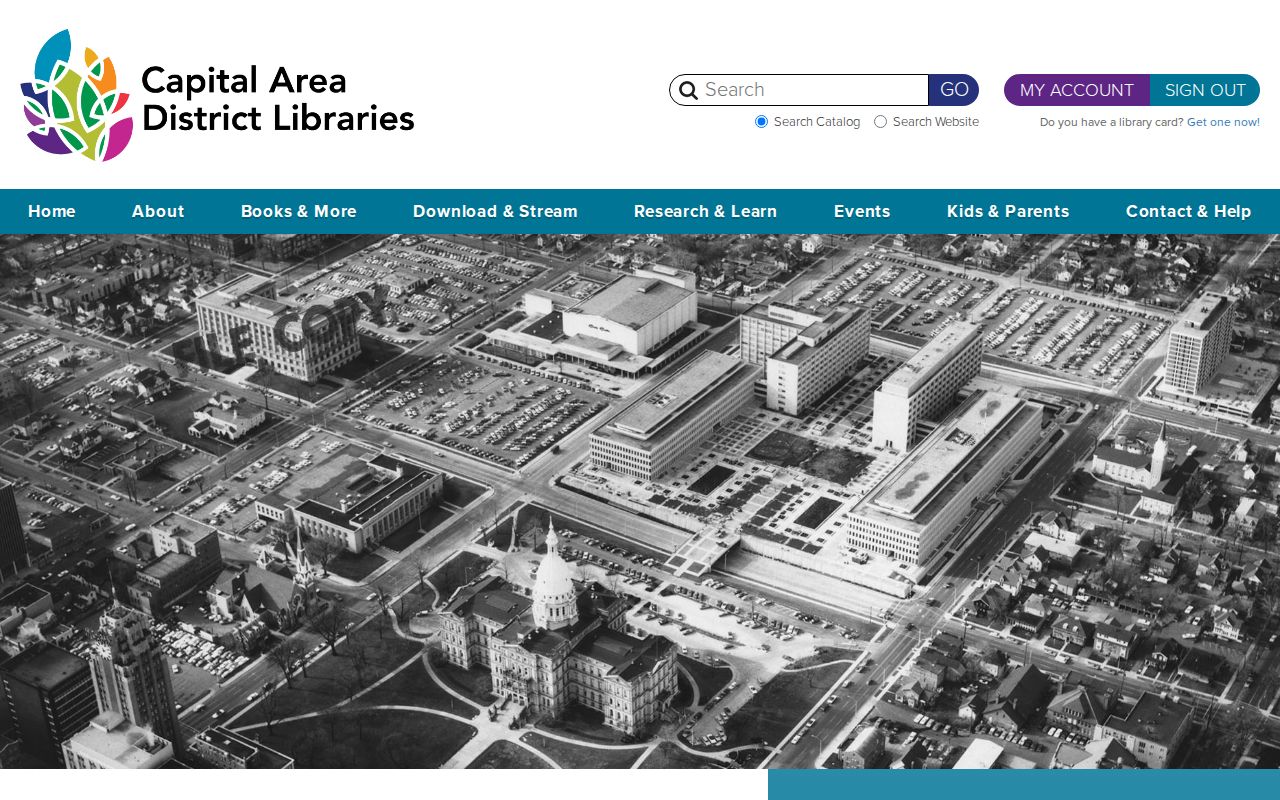
Postal and parcel clues often need a historic map or library source beside the online assessment record.
Historical Delhi Township Resident Directories
Historical directories, yearbooks, maps, obituaries, and address files provide the older layer of the Delhi Township residents directory. CADL holds Lansing-area city directories from 1867 to the present in its print room, with Ancestry full text through 1960 and selected digitized items. The early verified sequence includes 1867, 1873, 1878, 1883, 1894, and 1904. Cataloged Polk holdings include 1945 to 1973 runs with gaps and volumes that cover Holt and other suburban communities.
The collection is not a continuous directory for every rural parcel. Bresser and criss-cross volumes work from a street or telephone direction, but the exact Delhi or Holt year must be checked on the shelf. CADL’s Local History Center holds directories, newspapers, maps, name-index cards, yearbooks, real-estate collections, and staff help. The Holt-Delhi Historical Society adds small local directories, rural directory material, and lookup or house-history assistance.
CADL Local History Center is the primary local collection route for a dated household question.
Directory evidence is historical. Pair it with the relevant vital, obituary, deed, or probate record before extending a household trail.
- Roll
- A list or index created for one public purpose, such as assessment or elections, not a complete resident census.
- Index
- A finding tool that points to a record, often without reproducing the full document.
- Criss-cross directory
- A reverse directory arranged from a street or phone number toward a listed name.
- Legal description
- The lot, block, subdivision, or metes-and-bounds text that identifies land in a deed.
Delhi Township Vital Record Channels
Vital records answer event and relationship questions, not a current-address question. Ingham County has births and deaths from 1867 and marriages from 1837. The county clerk handles county-event certificates and genealogy review, while Michigan MDHHS handles statewide certified copies and verifications. Genealogy access under MCL 333.2885 applies when a death, marriage, or divorce is at least 75 years old, or a birth is at least 110 years old, subject to the stated sealing exceptions. Current certified copies follow separate eligibility rules.
There is more than one access channel. State ordering can be online, by mail, phone, drop box, appointment, or Will Call under the relevant MDHHS process. The Ingham genealogy route is an in-office review with restrictions on copying and recording. An old yearbook or directory can suggest a person or address, but the clerk, state office, archive, or cemetery custodian controls the event record and its release rules.
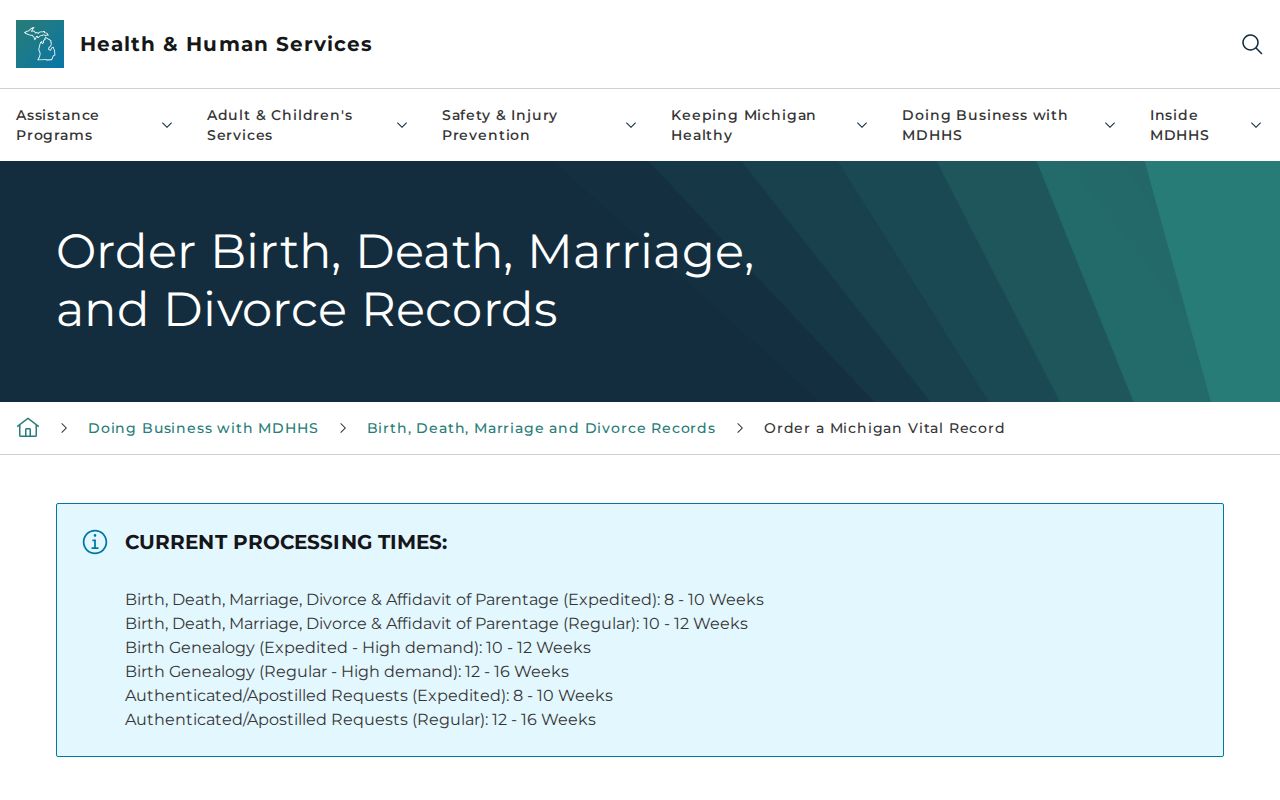
Michigan Vital Records ordering information lists the statewide request channels.
When a current certificate is restricted, use the official eligibility route rather than relying on a directory or another person’s account.
Delhi Township Same-Name Checks
A matching name is only a lead. Compare a person’s full name with a parcel, date, middle initial, prior or maiden name, case number, school year, or deed party role. Start with the narrowest known detail and add one independent record at a time. The property card can anchor a parcel and recorded owner. A deed can confirm a formal transaction name. A public court file can separate similar names when the case number and dates fit. A historical directory or obituary can place the person in a specific period.
Stop when the available records remain ambiguous. A mailing address can belong to an agent, lender, estate, family member, or an address that is no longer current. A historical yearbook listing is not a modern location. The lawful response to an uncertain name is to record the limit, ask the custodian about a defined public file, or use CADL and archive sources for the historical question.
Delhi Township Family History Paths
For a former classmate, family member, or estate question, the local-history trail often adds more than a current portal. CADL’s digital Holt High School yearbooks include 1930, 1931, 1937, and 1946 through 2017 with gaps. Its broader collections include newspapers, obituary indexes, name cards, maps, and real-estate files. The Holt-Delhi Historical Society holds yearbooks, photographs, pamphlets, plat maps, papers, small local directories, and a 1916 Rural Directory of Ingham County.
Pair a historic address with a dated source, then confirm the relationship through a public event, probate, deed, cemetery, or newspaper record where access allows. The Lansing State Journal index reaches back to 2003, while other Ingham newspaper runs are available through CADL and the Library of Michigan. No library volume or obituary establishes a current address by itself.
Delhi Township Vault and FOIA Fallbacks
An online result is only one access channel. Ingham County says pre-1960 deed documents require a vault appointment, and the official page does not publish a single online-index start year. The Register of Deeds offers Direct Search and Tapestry, public computers, and the vault. Carry the parcel number, legal description, party names, and document clues from BS&A so staff can locate the right instrument. The county does not prepare documents or give legal advice.
Michigan Freedom of Information Act, MCL 15.231 et seq., gives a defined process for records held by a public body. A written request must describe the record well enough to locate it. The general response time is five business days, with a possible ten-business-day extension. Ingham County notes that property, election, vital, and military-discharge material is normally accessed without FOIA, while courts are excluded from FOIA. Ask the right custodian first: assessor for property, Register of Deeds for instruments, clerk counter for court files, and CADL or the Archives for historical material.
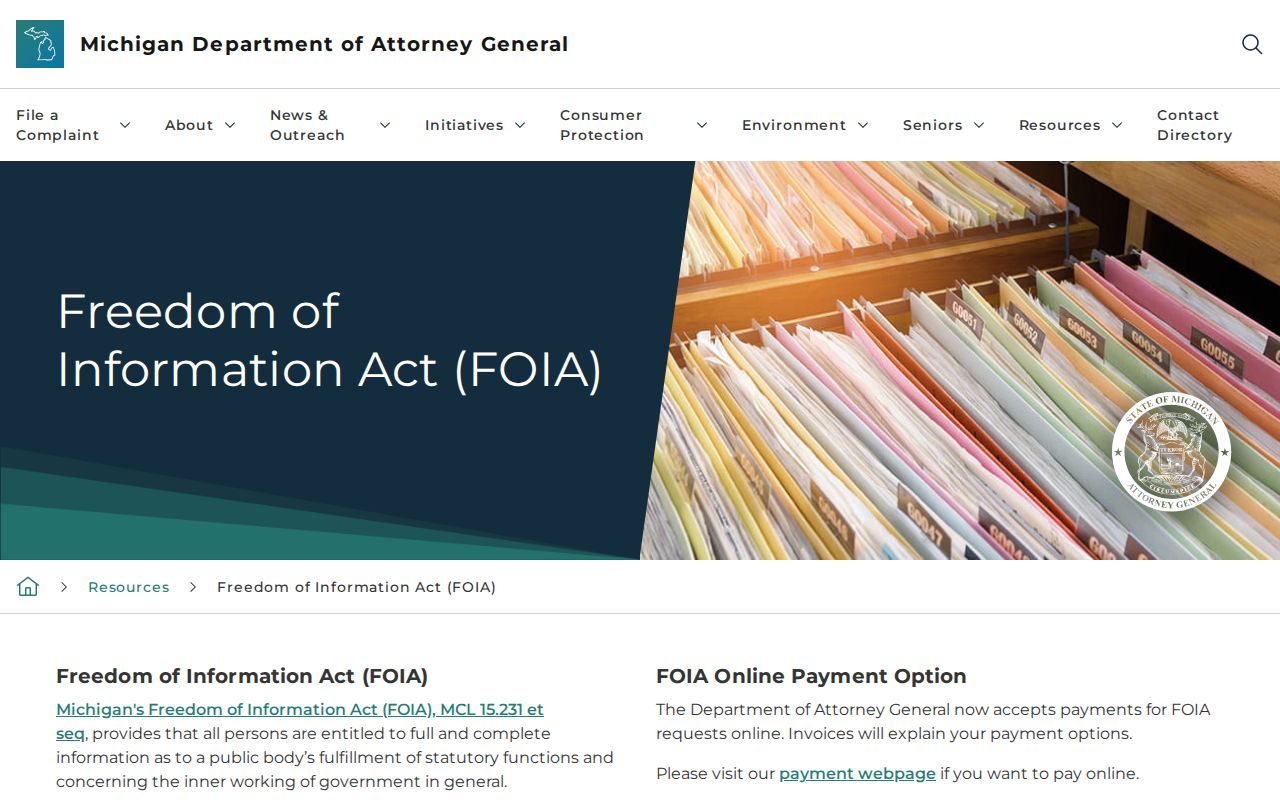
Michigan Attorney General FOIA guidance explains the state process and response timing.
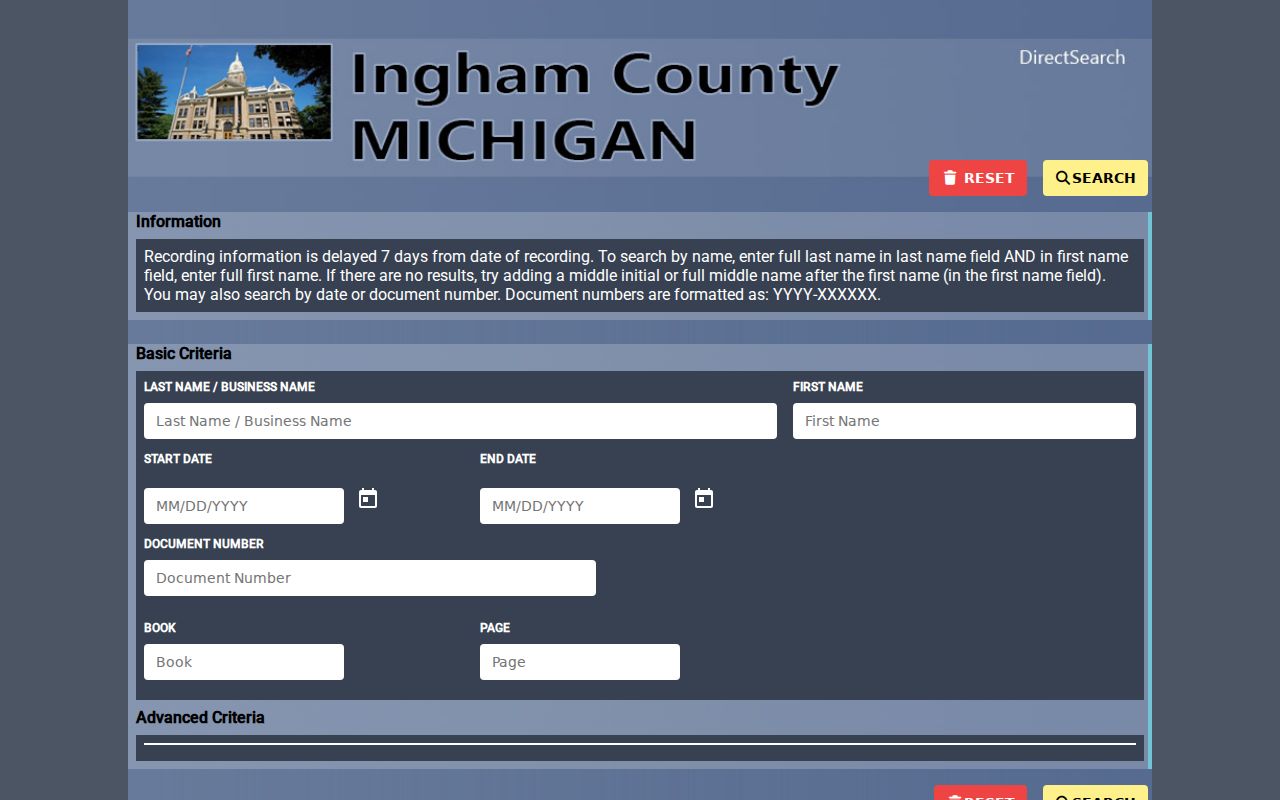
The deed-index screen is a starting point for a recorded transaction trail, while older documents may still require a visit or scheduled vault access.
Delhi Township Cemetery Record Gaps
Local history can preserve a resident trail when an ordinary directory ends. Pioneer Cemetery was deeded in 1850 and used actively from 1853 to 1938, but an unknown fire destroyed its record books. The remaining path includes headstone transcriptions from the 1990s and Historical Society copies, then obituaries, probate, and county clerk sources. That evidence should be labeled as reconstructed rather than treated as one complete register.
Custody also changes across time. North Cemetery began as Delhi property in 1852 and moved with the northern area annexed to Lansing in 1960. A person who appears in a Delhi-era cemetery or neighborhood record may now require Lansing cemetery administration for the present interment route. Maple Ridge and Markham have different township-custody histories. These local gaps make a careful chronology more useful than a single broad name search.