
Finding a Delhi Street by Address
A Delhi Township street search starts with the situs address, meaning the physical parcel location used by the assessor. Search that address in the free BS&A record, write down the parcel number and legal description, then use the deed index for the recorded transfer trail. The parcel number is the most stable handoff between Delhi records. It is safer than relying on a street spelling or a postal label alone. The owner or taxpayer shown on an assessment card is a property-record party, not automatic proof that every person at the address is currently there.
- Enter the address in the Delhi BS&A portal and preserve the situs address, parcel number, legal description, and displayed owner or taxpayer fields.
- Use the Delhi Township Interactive Map / GIS to place the parcel among nearby lots, zoning, wetlands, flood information, and parks.
- Check the tax, building, special-assessment, or utility route only for the address context the BS&A interface actually exposes. Do not treat an account record as a household list.
- Search the current owner as grantee in the Ingham County Register of Deeds Direct Search, then work back through the seller's earlier acquisition.
- For an older household clue, compare the street with CADL's criss-cross and directory holdings, and verify the result against the actual volume and a second historical source.
That order keeps the modern parcel, the legal transaction, and the historical address evidence separate. It also prevents a street directory result from becoming a claim about a person without enough support.
Delhi Street Directory BS&A Fields
Delhi Assessing makes BS&A available without charge around the clock for property and tax information, sewer accounts, special assessments, building information, and photographs. Its all-record interface can search more than the assessment roll. For a street-directory task, use the address route first and treat the Street Number to field as a range tool, not a promise of a downloadable street-wide list. The exact minimum-match rule, result cap, export behavior, and historical coverage dates were not published in the inspected view.
| BS&A field | Input type | When it applies | Delhi search note |
|---|---|---|---|
| Record focus | Navigation or dropdown | Required | All Records, Assessing, Building Department, tax, utility, special assessment, and related routes |
| By | Dropdown | Required | Address, Name, Parcel Number, Utility Billing Account Number, or receivable identifiers |
| Street Address | Text | Address route | Use the physical address and retain the returned parcel details |
| Street Number to | Text | Optional | Provides a number-range control for a road or segment |
| Name | Text | Name route | Owner, person, or account-name searching; matching rules were not stated |
| Parcel Number | Text | Parcel route | Carry the number between assessment, map, deed, and office requests |
| Advanced Address Search | Link or control | Optional | More address controls are available; a ZIP field was not visible in text inspection |
Buttons observed on Delhi's screen include Search, Detailed Record Search, All Record Search, Assessing Search, Building Department Search, Current Tax Search, Property Sale Search, Apply for a Permit, and Pay. A returned sale-history line is a useful lead, but the Register of Deeds instrument remains the record to inspect when the transfer details matter.
A parcel is the township or county identifier for a tract. A situs address is the parcel's physical location, while a mailing address is only the correspondence destination. A plat maps a recorded subdivision layout. A criss-cross directory reverses the usual name-first arrangement so an address or telephone entry can lead back to a name in the relevant historical volume.
Delhi Street Parcels on GIS
The Delhi GIS page identifies parcels, approximate boundaries and dimensions, parks, zoning, wetlands, and flood information. That makes it a useful street-by-street context layer before a deed search. It is not a legal survey. Delhi warns that the map is generalized for planning and reference, accuracy is not guaranteed, and cadastral maps are not legal descriptions. A boundary question belongs with the assessor or a survey professional, not with a screen capture from the viewer.
See the township's interactive GIS and parcel-map entry before comparing adjacent Delhi Township street parcels.
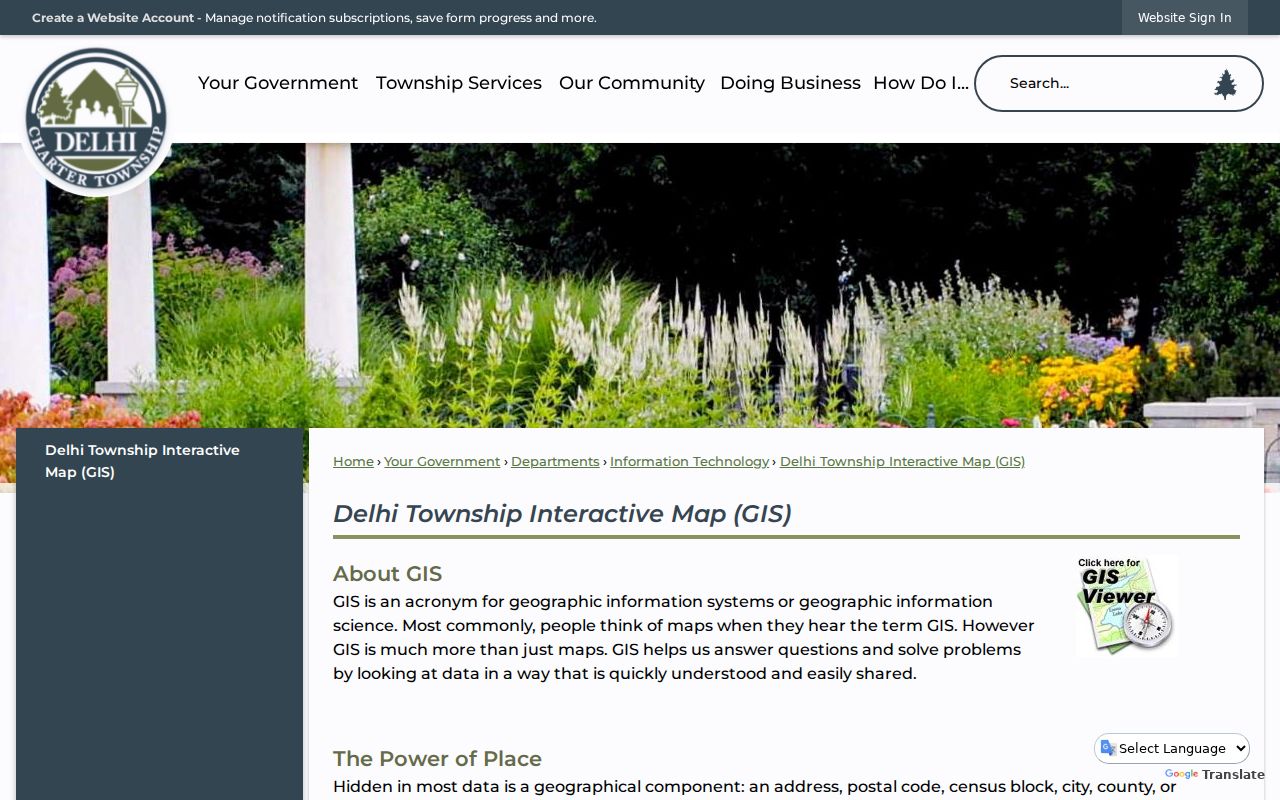
The map view is strongest when it helps connect a street address to a parcel identifier that can be checked in BS&A and the Register of Deeds. The live viewer's exact select, identify, measurement, buffer, and print controls were not confirmed in the research, so they should not be assumed.
Delhi Address Records by Street
Several Delhi and Ingham records can be keyed to an address, but they answer different questions. Property cards are the present-day starting point. Deeds explain recorded transfers. Permit and agenda materials can date a project or public hearing. Historical directories may place a household at an address for a particular publication year. None of these sources alone proves every person connected with a location.
| Address-record layer | Search key | What it can show | Access route |
|---|---|---|---|
| BS&A assessing | Address, range, name, parcel | Owner or taxpayer, mailing and situs fields, parcel, building, tax, and sale data | Free Delhi portal and assessing office |
| Delhi GIS | Map or parcel | Approximate parcel, dimensions, zoning, wetlands, flood areas, and parks | Public township viewer |
| Recorded deeds | Party name and legal description | Transfer parties, instrument, recording date, and chain | Direct Search, Tapestry, public computers, and vault |
| Building and agenda records | Address, parcel, applicant, project | Work or hearing events and related dates | Community Development, agenda packets, inspection, or FOIA |
| Election records | Individual and jurisdiction | Personal status or public fields subject to redaction | MVIC and SOS FOIA route |
| Directory and criss-cross volumes | Street, number, name, telephone | Historical address and telephone clues, depending on title | CADL and Library of Michigan holdings |
Delhi's property record and the Ingham instrument are the key pairing. Keep the legal description with the address because it can bridge changes in numbering, postal label, and city or township custody. For a complete historical directory shelf, use the Delhi Township city directory collections rather than expecting one volume to cover every township address.
Delhi Street Deeds and Plats
After BS&A provides a parcel number and legal description, search the recorded acquisition by the current owner as grantee. The instrument should be checked for the seller or grantor, recording date, document or book-and-page reference, and description. Then search that seller as grantee to locate the earlier acquisition. Along a Delhi Township street segment, adjacent legal descriptions and subdivision or plat names may expose the relationship between lots more reliably than a street number.
The Ingham County Register of Deeds says pre-1960 documents require a vault appointment. The county did not publish a precise online-index beginning year in the inspected material. Use public computers or arrange the vault visit for older instruments, and call the office for the current copy fee schedule rather than assuming one.
View the Register of Deeds access route that supports this Delhi Township street directory trail.
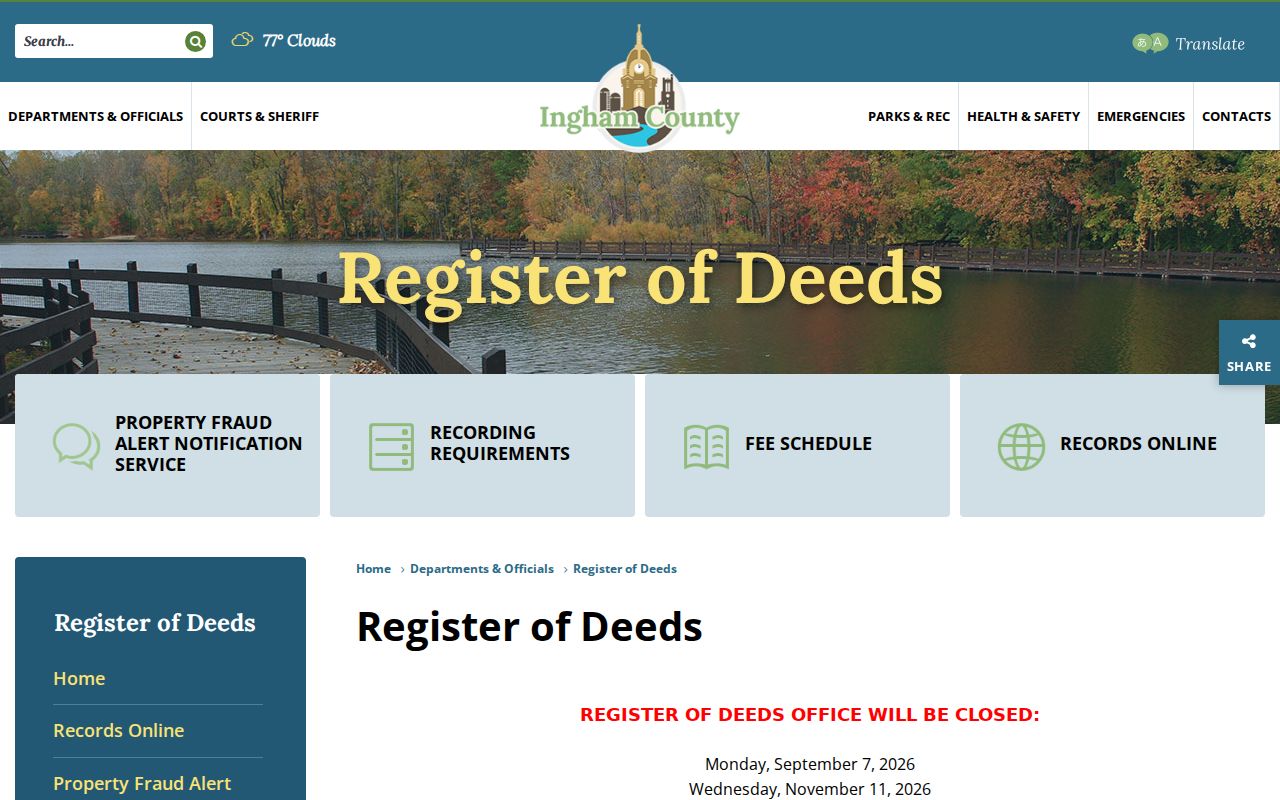
A deed records a transaction and its named parties. It does not settle every question about current use of the address, so it should be read with the assessor card and any independently supported historical evidence.
Delhi Street Permits and Agendas
Delhi says most home improvements and trade work require a building or trade permit, and soil-erosion work can require a permit or waiver. That creates an address trail for construction or alteration, but not a public resident roll. A public Delhi permit-results interface was not located. The fallback chain is Community Development, township inspection, posted planning or zoning material, and a records request for non-posted public records.
The Delhi Agenda Center lets a researcher search by start date, end date, terms, and category. Its categories include the Board of Trustees, Planning Commission, and Zoning Board of Appeals. Search the address and, when appropriate, the owner or applicant name in an agenda packet. Meeting records may explain an address-related project, while the assessment and deed trail still provide the parcel backbone.
Note: Delhi's posted agenda search is a meeting-document archive, and its earliest coverage date was not established in the inspected material.
Delhi Street Numbers Through 1913
Older addresses need a numbering check before a Delhi street directory search can be trusted. Lansing-area directories used one approach from 1867 through 1883 and another from 1885 through 1905. A Philadelphia or block plan began in 1906. The 1913 Sanborn maps show dual numbering, which can bridge an old address to a later one. This does not mean every rural Delhi parcel appears on every Lansing map or directory.
Postal and civic geography can shift the trail too. Delhi Center became Holt in 1860, and Delhi's northern third was annexed to Lansing in the early 1960s. A record may therefore use Delhi Township, Holt, Lansing, or an Ingham County label at different times. Use the street name, legal description, map, and parcel history together instead of treating one postal city as a boundary decision.
Delhi Street Voter Geography
Michigan's Voter Information Center is an individual registration-status and polling-information tool, not a public street roster. It can provide an individual's status, local clerk, polling place, sample ballot, and absentee tracking. Public voter records remain subject to redaction. Driver-license and state-ID numbers, month and day of birth, phone, email, digitized signature, and other protected fields are not open for street-directory use.
For Delhi Township, the precinct page supplies polling-place geography, not a list of names. A statewide QVF summary may be requested through the SOS FOIA route with a clearly described jurisdiction, fields, and date or version. Its release conditions and redactions control the result. Ballot choices are secret, and a public record cannot justify a claim that every person at a parcel is registered there.
Historic Delhi Street Directory Clues
CADL's local history resources are the historical street layer when a modern parcel card stops short. Polk directories can include surname, street, telephone, and classified sections. Bresser or criss-cross volumes work in the reverse direction from street or telephone data. Depending on the title, an entry may include an address, occupation, spouse notation, owner marker, or a notation that someone moved. Capture the abbreviation key from the exact volume instead of expanding initials from guesswork.
Open the Delhi BS&A detailed address search before carrying the exact modern street spelling, parcel number, and legal description to CADL. The street directories are not a continuous, complete Delhi series, so the volume year and coverage must be checked at the shelf.
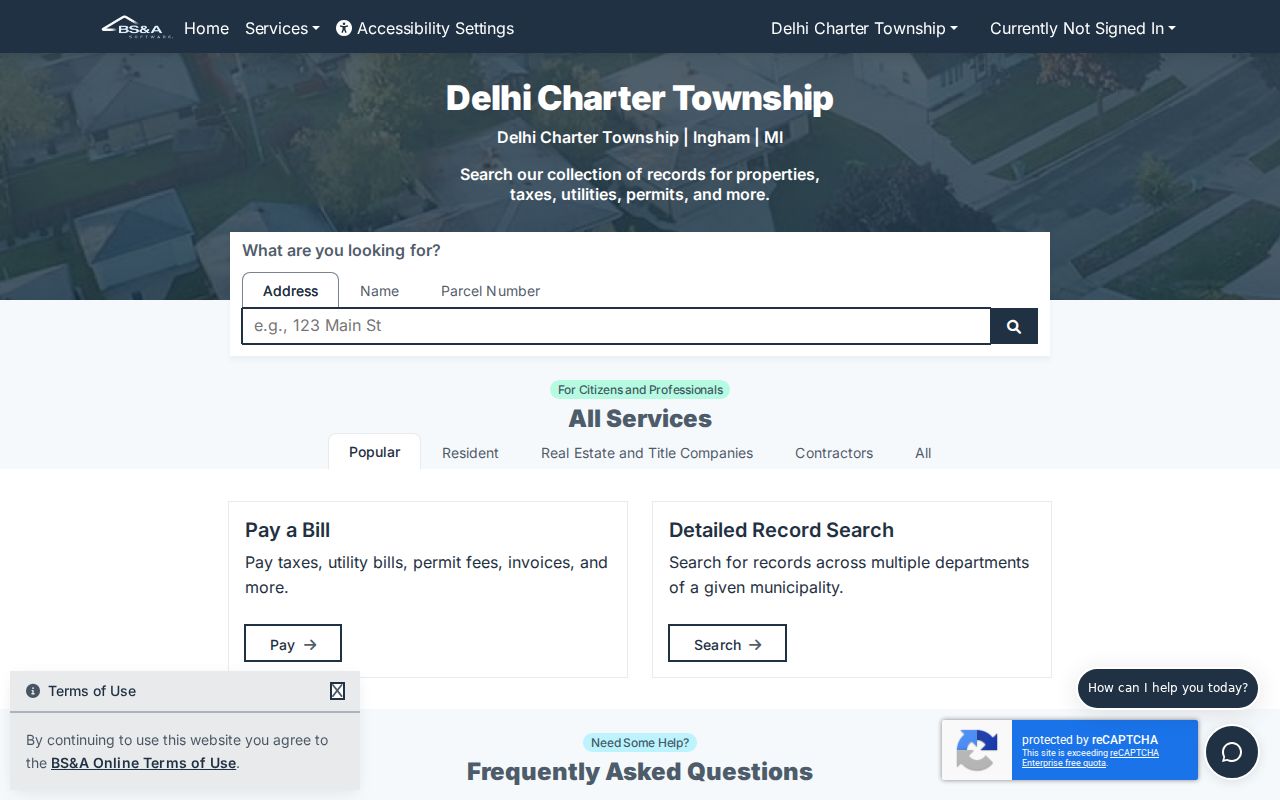
The detailed-address route is useful for anchoring a historical search to a documented current parcel. It does not remove the need to test older number systems or the possibility that a directory covered only part of the township area.
Delhi Street Directory Privacy Limits
A Delhi street directory cannot reveal every private connection to an address. The public property trail does not establish a complete household. Utility customer information is not offered as public resident data, and motor-vehicle addresses are restricted by the federal Driver's Privacy Protection Act. Michigan's Address Confidentiality Program also protects qualifying participants through a designated address and special handling of voter information.
Lawful use. Delhi Township address records support personal, lawful research and property history. Michigan's anti-stalking law, MCL 750.411h, prohibits using records to follow, threaten, intimidate, or harass another person.
When a public record seems wrong, contact the custodian named on that record with the parcel, case, or document number and request the applicable correction or notation. Do not turn a mailing address into a claim about where a person is now.
Delhi Street Records in 2026
Delhi Assessing reports a spring and summer 2026 property-record update using GIS, drive-by review, online property sites, and real-estate listings. Verification questionnaires were directed to named roads and subdivisions, including Aurelius, Holt, Grovenburg, Waverly, and several estate areas. The work is a current data-quality project. It is not a statement that every listed owner is present at a parcel or that an online field is final.
For a Delhi Township street directory result that matters, save the search date, compare the card with the Register of Deeds, and ask the assessing office about a discrepancy. Delhi Assessing permits inspection by appointment or walk-in and says responses are generally within one business day.